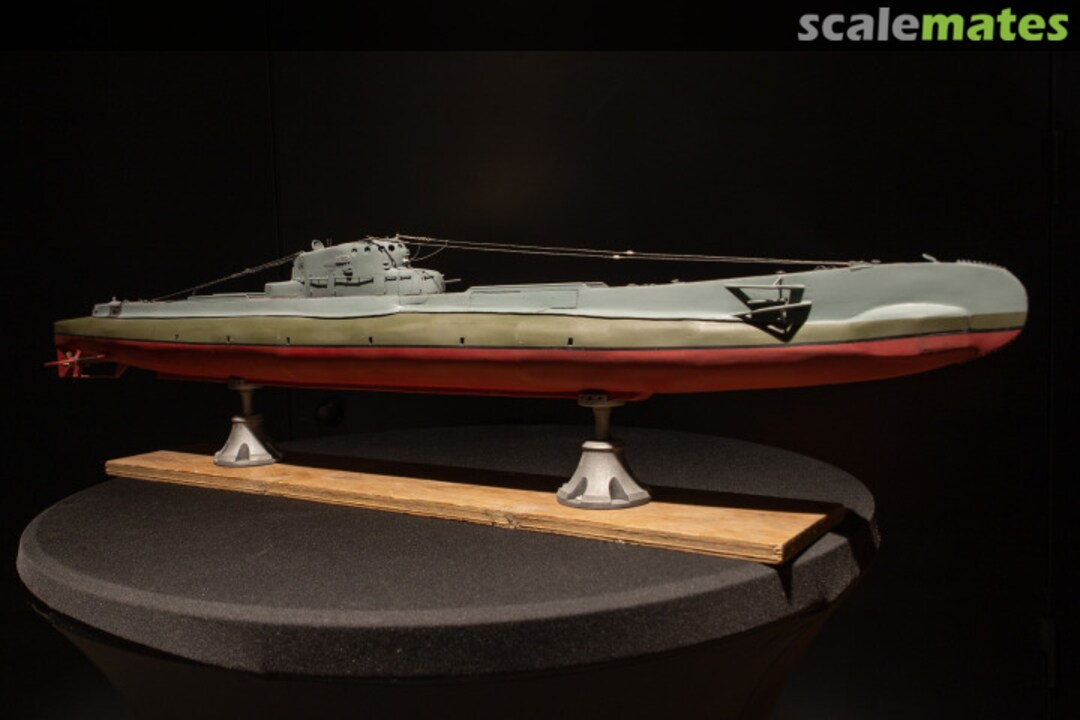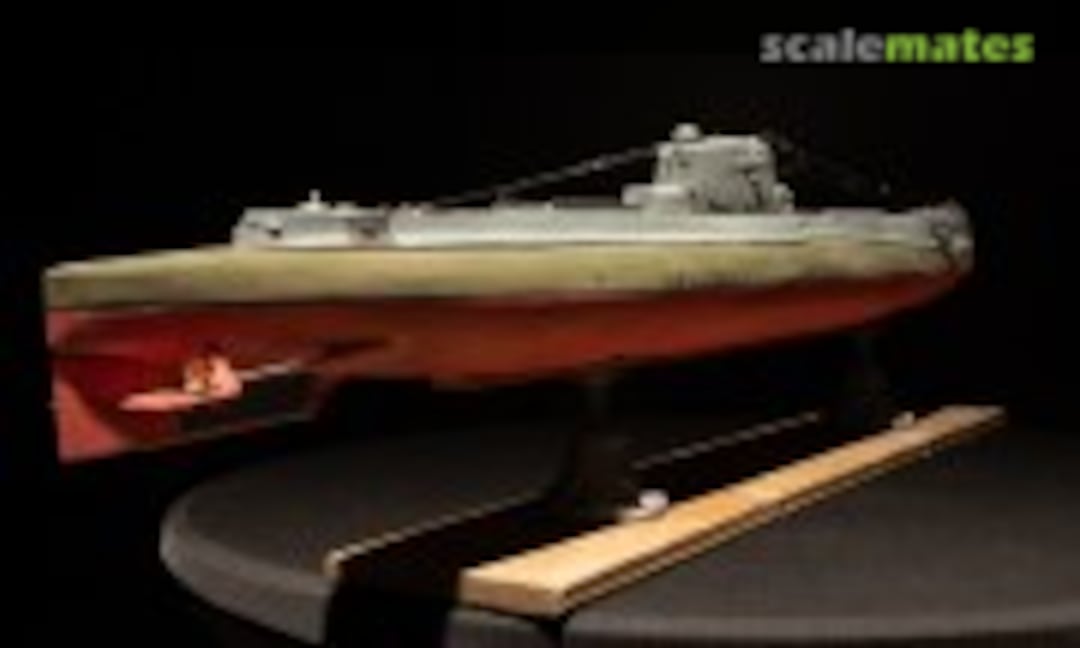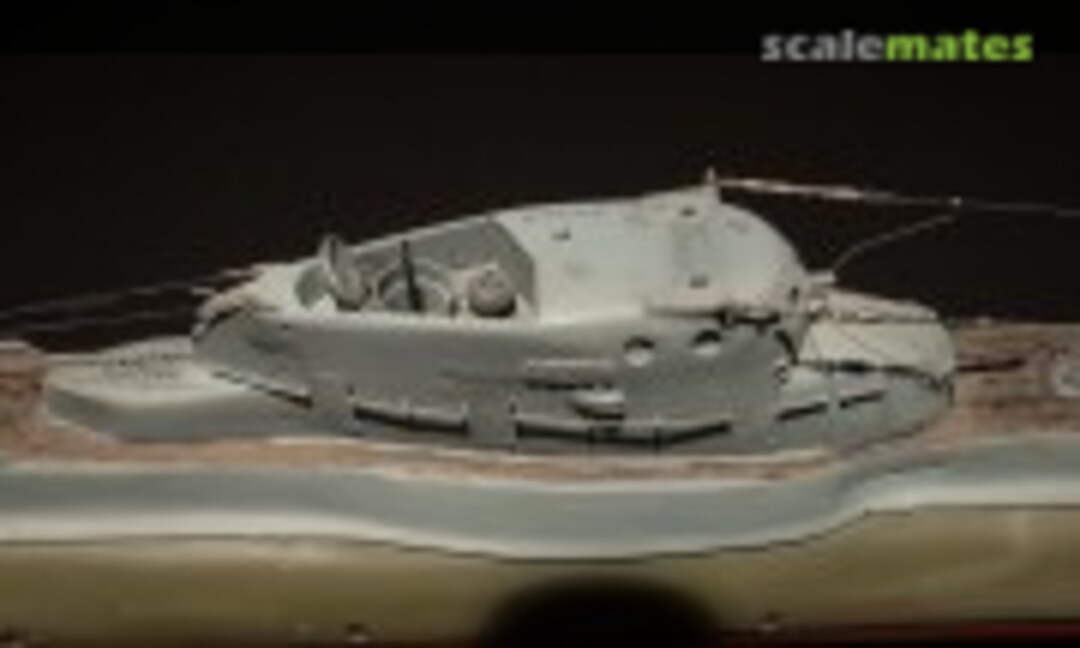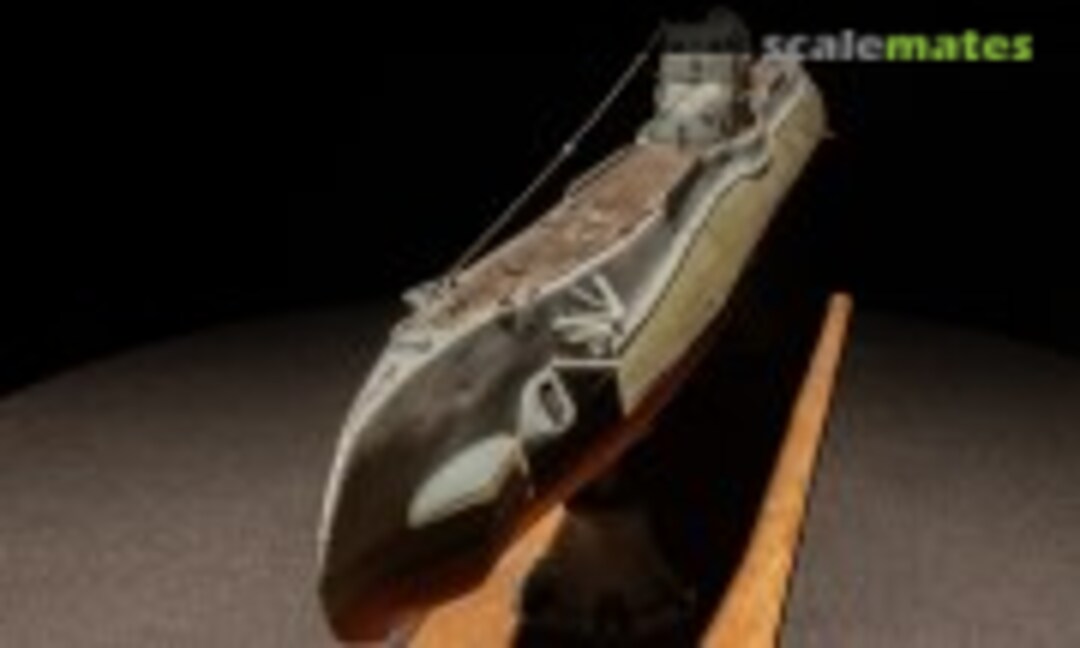

ORP ORZEL 1/72
- Scale:
- 1:72
- Status:
- Completed
- Started:
- March 11, 2024
February 10, 1939, when a completely new ship arrives at the port of Gdansk in front of a large crowd. It is a matter of real national pride, because even if it is made in the De Schelde factory in the Netherlands, it is still the design of Polish engineers. And this is not some small and miserable ship! It was a very large, powerful and, most importantly, very modern ship. Speed on water 20 knots, armament 20 torpedoes, 105mm gun on board and double 40mm anti-aircraft gun in tower. Orzel also had a twin sister named Sep. This ship survived the war in Sweden and then returned to where it was in service until 1969. A fact that perhaps says something about the modernity of this ship at the time.
But Orzel's story begins to gain momentum soon after the first presentation to the jubilant crowd. In August, when the threat of war was already very real, Poland had 5 submarines armed, and when the war began, all of them were ordered to go out on patrols to protect Poland from the sea. The operation was called Worek. Orzel's story is written quite precisely, and in this deion, a detail emerges at the very beginning, which will become very important in the future. Namely, the ship's captain and first mate did not get along very well. The captain was 37-year-old Henryk Kloczkowski (hereinafter Klocz), the most experienced submarine captain of the Poles. A tough and straightforward man who was highly respected by the team. However, the other man on board was 32-year-old Jan Grudzinski (later Grudz) Grudz had served Orzel for three months and had quite a bit of experience. For some reason, the captain did not trust or tolerate him, and since the crew respected the captain very much, they also tended to the captain.
On the morning when the ship was supposed to leave, the captain was late and Grudz, accustomed to military discipline, was furious. Klocz arrived an hour later and at 06:35 in the morning Orzel set sail from Gdansk with 63 men on board. Initially, the patrol area was supposed to be near Gdansk, which was considered one of the most dangerous areas, as the threat from German planes was constantly high. For several days that followed, they operated cautiously, and thus the enemy's ships were not found. This created a tense atmosphere in the team at the very beginning, because everyone knew that the situation in Poland was very bad. Thus, the team hoped to fulfill its obligation to do something with a small number of submarines. On a couple of occasions, Orzel was immediately attacked by German planes, but did not receive major injuries. Orzel also met other Polish ships at sea, and the news they received about the situation and progress of the war made the captain even more cautious and pessimistic, which caused the crew to become more and more frustrated. The relationship was also strained by the situation where the captain, contrary to the officers' opinion, gave the order to surface during the day, where he immediately came under attack by the Germans again, which was once again escaped by diving deep. The situation worsened further when the captain suddenly decided to change the patrol area without notifying headquarters and obtaining permission. On the seventh day of the war, having just passed through the German mine barriers again, Captain Klocz reports that he is not feeling well, and Grudz investigates what the problem is. The captain announces that he is getting seriously ill, but Grudz does not believe him and claims that the captain is afraid to fight. Over the next few days, Grudz demands that he be able to contact headquarters to take control of the ship, but the captain refuses. A few more days passed and on September 10, the captain gave permission to contact the base and explain the situation.
By that time, 6 days had passed since the last contact with the base and it was feared that Orzel had lost. After getting an overview of the situation, the headquarters was given a choice whether to take the sick captain to the nearest neutral port and hand over command to Grudzinski, or to return to the base together and take on a new captain. However, it was still days before the decision was made, and since the German ships were not close, it was still not possible to find action. In addition, there were some disputes between the captain and the officers about the origin of the ships seen in the periscope, and the tense situation continued to worsen. And that's when Orzel's hydraulic system failed. On September 13, the captain announces that his health is deteriorating and he has decided to choose a neutral port. The nearest options, which at that moment were the ports of Sweden and Latvia, are also shown immediately. However, Klocz refuses and states that his wish is to head to Tallinn. Everyone is very surprised, because they know that Estonia is neutral, but on friendly terms with the Germans. However, the captain remains firm, leaving everyone with the impression that the reason could be his personal connection with Tallinn. However, there will be no major controversy this time, and Orzel will head to Tallinn.
Upon arrival in the neutral port of Tallinn, the ship was interned according to international law.
Captain Kłoczkowski was taken to a military hospital, and Grudziński assumed command.
Estonian authorities seized the submarine's 105mm deck gun and most of its navigation charts and books. Estonian guards were placed on board to prevent any escape.
In a dramatic move on the evening of September 18th, Captain Grudziński and the crew overpowered and secured the Estonian guards. They cut the mooring lines and slowly steered the submarine out of the harbour. Despite Estonian attempts to open fire, Orzeł managed to submerge in Tallinn Bay, escaping without navigational maps. It has been speculated that the Estonians deliberately missed their shots when opening fire, not wanting to damage a vessel belonging to a country friendly to them.
This was an overview of the circumstances under which Orzel ended up in Tallinn. Since I wrote this at length, I will briefly summarize what follows:
After escaping, Orzel hid for a while and then wandered off towards Gotland. Since there were no maps, etc., miracles of navigation were performed by keeping an eye on the beacons and trusting the gut feeling. In the meantime, our boys were dropped off on Gotland, given a decent amount of money and other things, and sent home. Since in the meantime the Germans and the Russians had both made a strong propaganda and claimed that the Estonians had been killed, the captain had to say the legendary words. "Those who come back from the underworld must travel home first class only"
Unfortunately, the Soviet authorities took advantage of Orzel's escape, claiming that Estonia could not defend itself and forced the establishment of its own bases to Estonia, which eventually led to the occupation. At the same time, it can be said that this would have happened later even without the Orzel case
Orzel himself ventured on and, despite all the hunters and minesweepers, reached England, where it was received with great astonishment and was soon sent to sea for the benefit of the Allies. The ship managed to make some patrols until it disappeared and has mysteriously disappeared to this day. Poles have tried to find their national pride with several expeditions, but so far the wreck has not been found. Orzel is believed to have lost hitting a mine.
Project inventory
Scratchbuilt No kits or aftermaket sets are attached.