


2nd ARMORED BRIGADE Royal Tank Corps
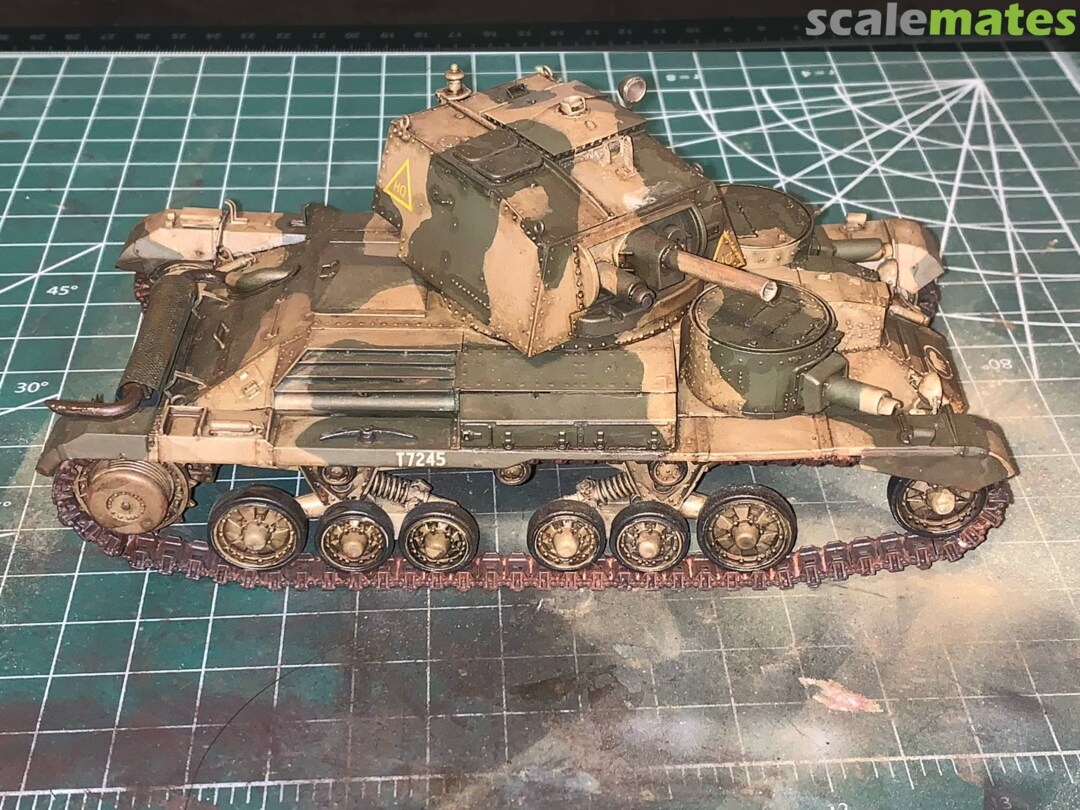
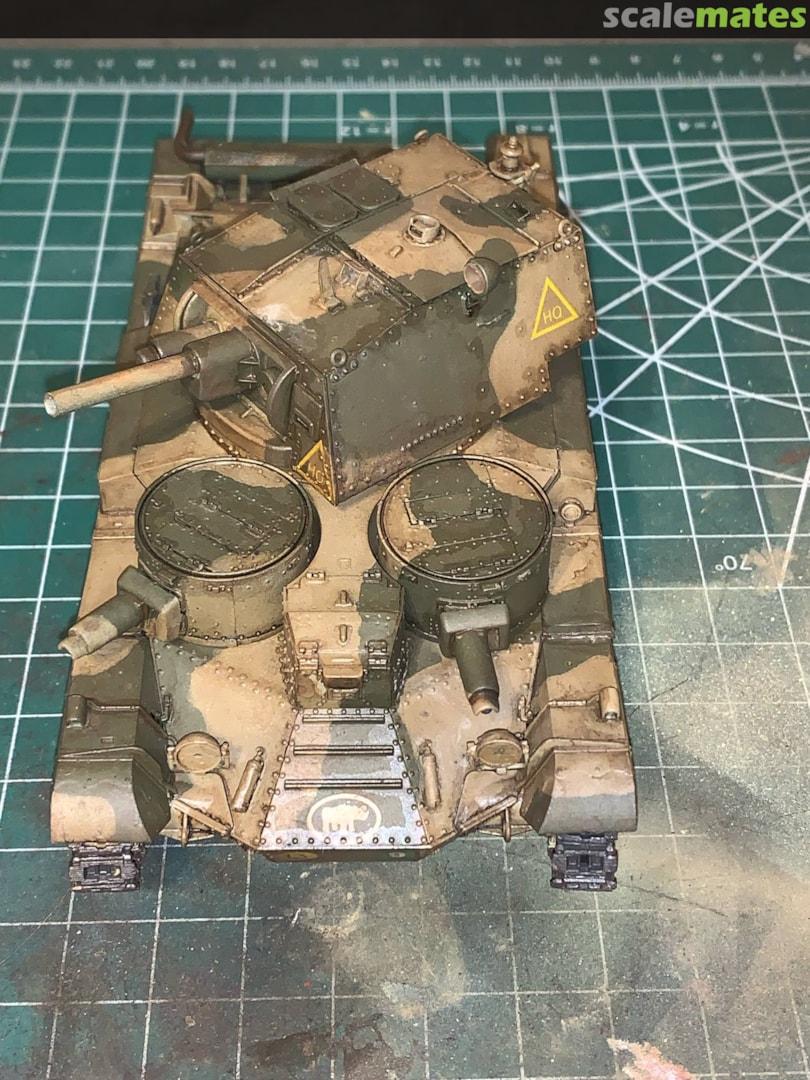
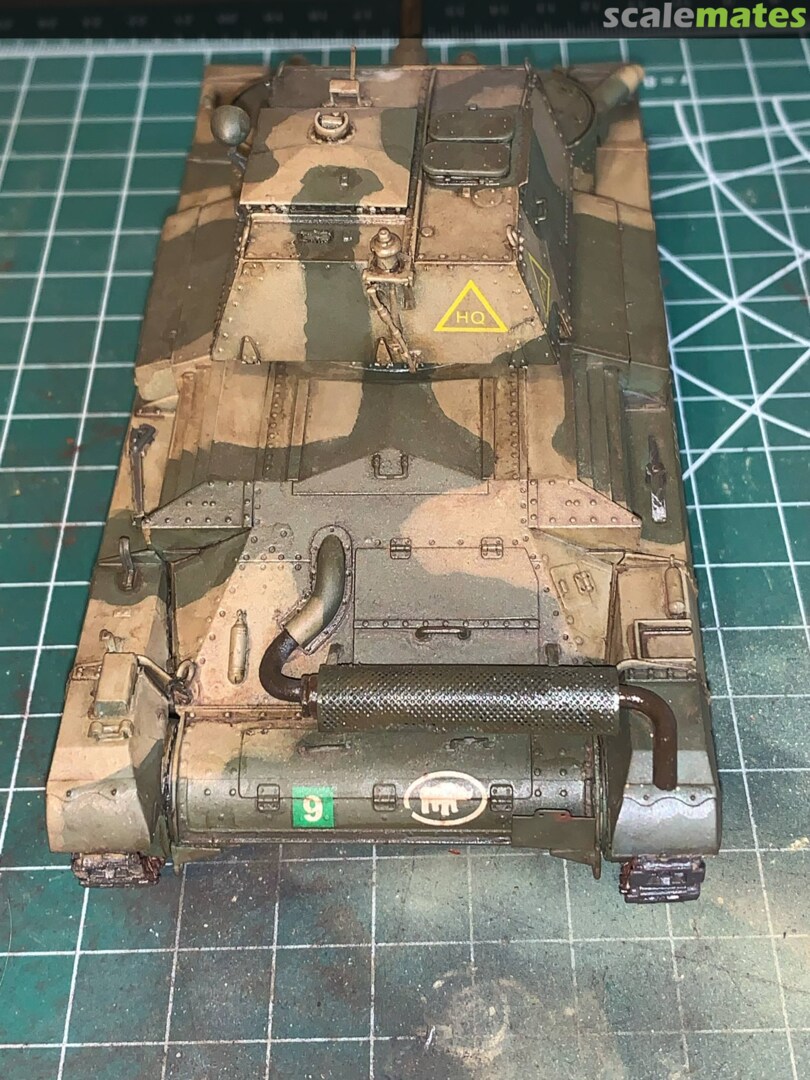
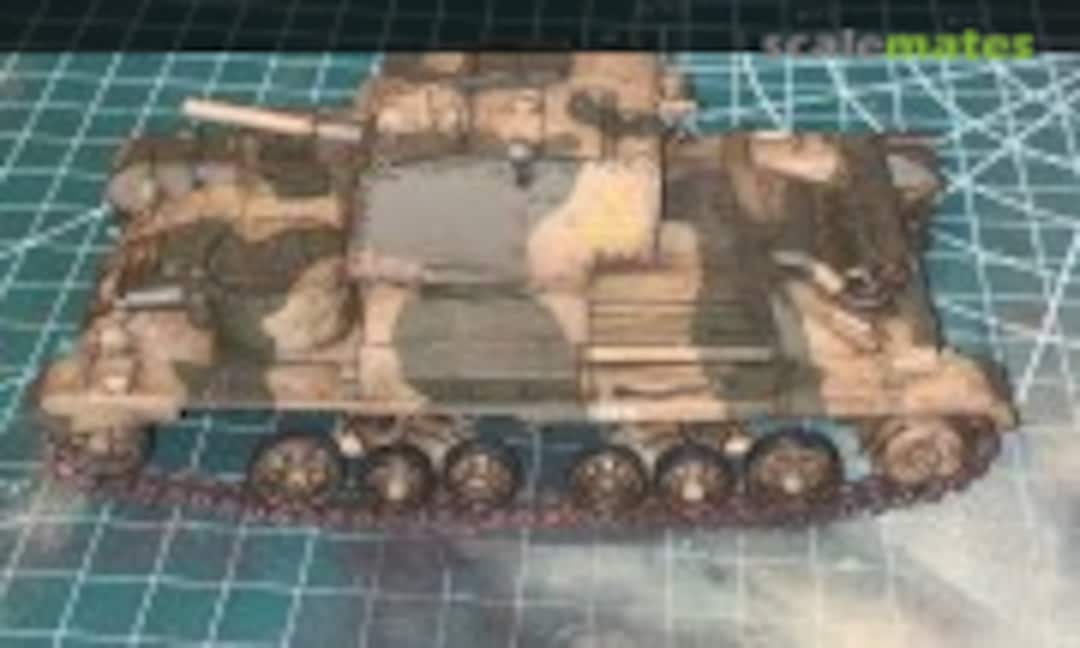 1July 16, 2025A9 Cruiser Tank C/S, HQ Squadron, 3rd RTR, 2nd Armored Brigade, 1st Armored Division, France, Jun 1940. Also known as the Cruiser Tank Mk I, the A9 was the first attempt by the British to design a modern medium tank just prior to WWII. With Germany openly re-arming its army in 1934, the British Army laid out specifications for a new type of tank to be classified as a Cruiser tank. It was to be well armed, fast, and moderately armored. Vickers submitted the design in 1936 and it was accepted for production of 125 tanks as a stop gap in 1937. The first A9 rolled off the line in early 1939. 40 were built as Close Support version armed with a 94mm howitzer for firing HE and smoke shells.
The tank proved to be rather awkward and unreliable. The hull proved have too many angles and surfaces making construction complicated and the twin auxiliary MG turrets were impractical. Tracks and suspension proved most problematic as the narrow tracks failed to gain traction on rough ground and the guides tend to allow the tracks to slip off at high speed. Armor was only 14mm making the A9 vulnerable to any type of armor piercing weapon of the day.
The A9 saw service in France (1940), North Africa (1940-41), and Greece (1941). The first Armored Division was so hastily sent to France in May 1940 that many of the tanks lacked radios and proper optics. They conducted a series of uncoordinated counterattacks and rear-guard actions that left all the tanks destroyed, captured, or scuttled.
The early cruiser tanks saw their greatest success against the Italians in North Africa. Operation Compass in December 1940 -February 1941 saw the British defeat a vastly larger Italian force in Egypt and Libya. In March 1941 a number of Cruiser tanks in Egypt were sent to Greece to aid against the German Invasion there. As in France, this proved to be disastrous. Cruiser tanks continued fight in Libya through 1941 will little success against Rommel's Afrika Korp until Operation Crusader end in victory in December and Rommel retreated t 2July 16, 2025A9 Cruiser Tank C/S, HQ Squadron, 3rd RTR, 2nd Armored Brigade, 1st Armored Division, France, Jun 1940. Also known as the Cruiser Tank Mk I, the A9 was the first attempt by the British to design a modern medium tank just prior to WWII. With Germany openly re-arming its army in 1934, the British Army laid out specifications for a new type of tank to be classified as a Cruiser tank. It was to be well armed, fast, and moderately armored. Vickers submitted the design in 1936 and it was accepted for production of 125 tanks as a stop gap in 1937. The first A9 rolled off the line in early 1939. 40 were built as Close Support version armed with a 94mm howitzer for firing HE and smoke shells.
The tank proved to be rather awkward and unreliable. The hull proved have too many angles and surfaces making construction complicated and the twin auxiliary MG turrets were impractical. Tracks and suspension proved most problematic as the narrow tracks failed to gain traction on rough ground and the guides tend to allow the tracks to slip off at high speed. Armor was only 14mm making the A9 vulnerable to any type of armor piercing weapon of the day.
The A9 saw service in France (1940), North Africa (1940-41), and Greece (1941). The first Armored Division was so hastily sent to France in May 1940 that many of the tanks lacked radios and proper optics. They conducted a series of uncoordinated counterattacks and rear-guard actions that left all the tanks destroyed, captured, or scuttled.
The early cruiser tanks saw their greatest success against the Italians in North Africa. Operation Compass in December 1940 -February 1941 saw the British defeat a vastly larger Italian force in Egypt and Libya. In March 1941 a number of Cruiser tanks in Egypt were sent to Greece to aid against the German Invasion there. As in France, this proved to be disastrous. Cruiser tanks continued fight in Libya through 1941 will little success against Rommel's Afrika Korp until Operation Crusader end in victory in December and Rommel retreated t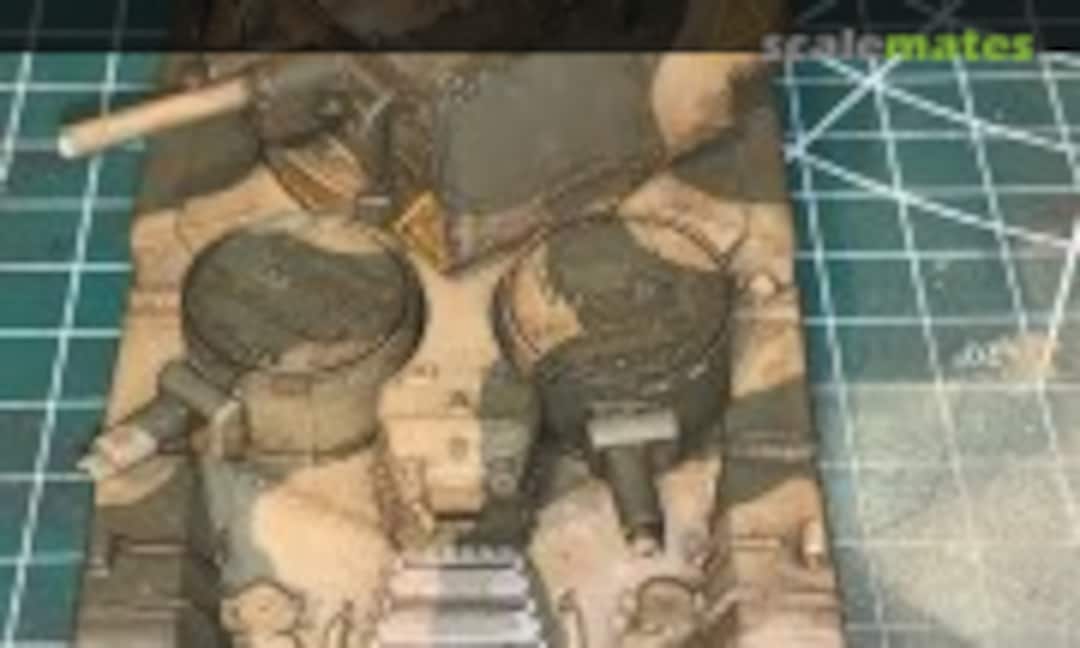 3July 16, 2025A9 Cruiser Tank C/S, HQ Squadron, 3rd RTR, 2nd Armored Brigade, 1st Armored Division, France, Jun 1940. Also known as the Cruiser Tank Mk I, the A9 was the first attempt by the British to design a modern medium tank just prior to WWII. With Germany openly re-arming its army in 1934, the British Army laid out specifications for a new type of tank to be classified as a Cruiser tank. It was to be well armed, fast, and moderately armored. Vickers submitted the design in 1936 and it was accepted for production of 125 tanks as a stop gap in 1937. The first A9 rolled off the line in early 1939. 40 were built as Close Support version armed with a 94mm howitzer for firing HE and smoke shells.
The tank proved to be rather awkward and unreliable. The hull proved have too many angles and surfaces making construction complicated and the twin auxiliary MG turrets were impractical. Tracks and suspension proved most problematic as the narrow tracks failed to gain traction on rough ground and the guides tend to allow the tracks to slip off at high speed. Armor was only 14mm making the A9 vulnerable to any type of armor piercing weapon of the day.
The A9 saw service in France (1940), North Africa (1940-41), and Greece (1941). The first Armored Division was so hastily sent to France in May 1940 that many of the tanks lacked radios and proper optics. They conducted a series of uncoordinated counterattacks and rear-guard actions that left all the tanks destroyed, captured, or scuttled.
The early cruiser tanks saw their greatest success against the Italians in North Africa. Operation Compass in December 1940 -February 1941 saw the British defeat a vastly larger Italian force in Egypt and Libya. In March 1941 a number of Cruiser tanks in Egypt were sent to Greece to aid against the German Invasion there. As in France, this proved to be disastrous. Cruiser tanks continued fight in Libya through 1941 will little success against Rommel's Afrika Korp until Operation Crusader end in victory in December and Rommel retreated t 4July 16, 2025A9 Cruiser Tank C/S, HQ Squadron, 3rd RTR, 2nd Armored Brigade, 1st Armored Division, France, Jun 1940. Also known as the Cruiser Tank Mk I, the A9 was the first attempt by the British to design a modern medium tank just prior to WWII. With Germany openly re-arming its army in 1934, the British Army laid out specifications for a new type of tank to be classified as a Cruiser tank. It was to be well armed, fast, and moderately armored. Vickers submitted the design in 1936 and it was accepted for production of 125 tanks as a stop gap in 1937. The first A9 rolled off the line in early 1939. 40 were built as Close Support version armed with a 94mm howitzer for firing HE and smoke shells.
The tank proved to be rather awkward and unreliable. The hull proved have too many angles and surfaces making construction complicated and the twin auxiliary MG turrets were impractical. Tracks and suspension proved most problematic as the narrow tracks failed to gain traction on rough ground and the guides tend to allow the tracks to slip off at high speed. Armor was only 14mm making the A9 vulnerable to any type of armor piercing weapon of the day.
The A9 saw service in France (1940), North Africa (1940-41), and Greece (1941). The first Armored Division was so hastily sent to France in May 1940 that many of the tanks lacked radios and proper optics. They conducted a series of uncoordinated counterattacks and rear-guard actions that left all the tanks destroyed, captured, or scuttled.
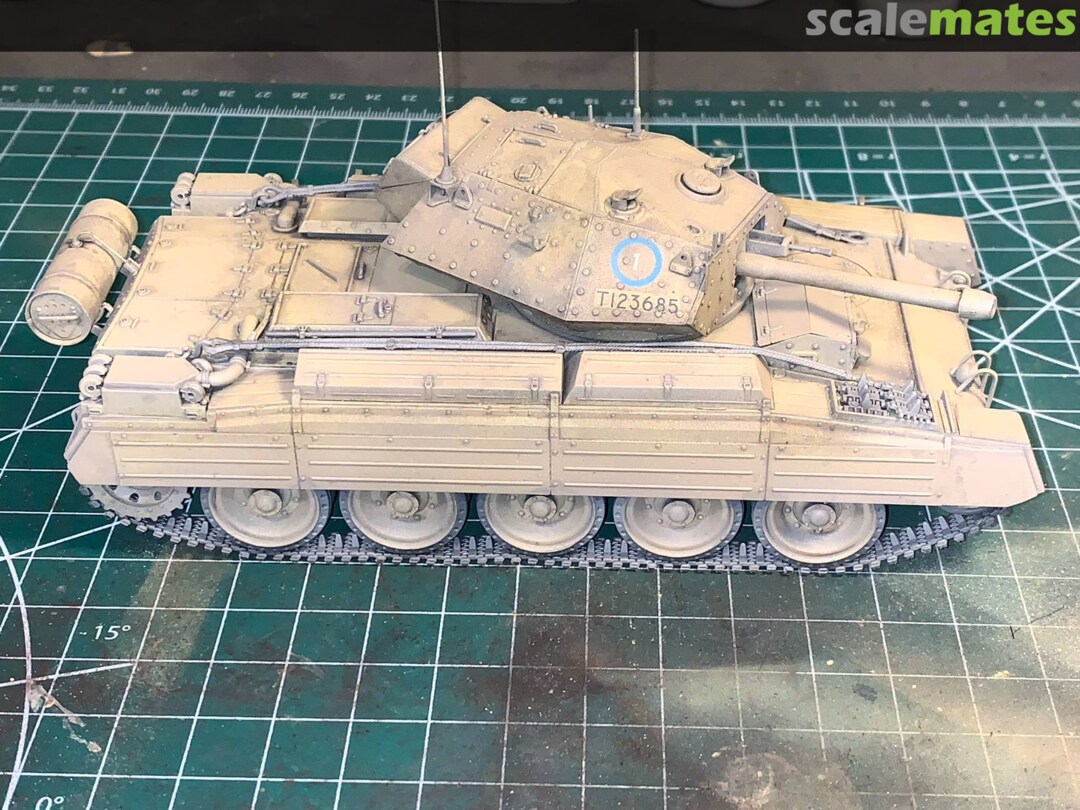
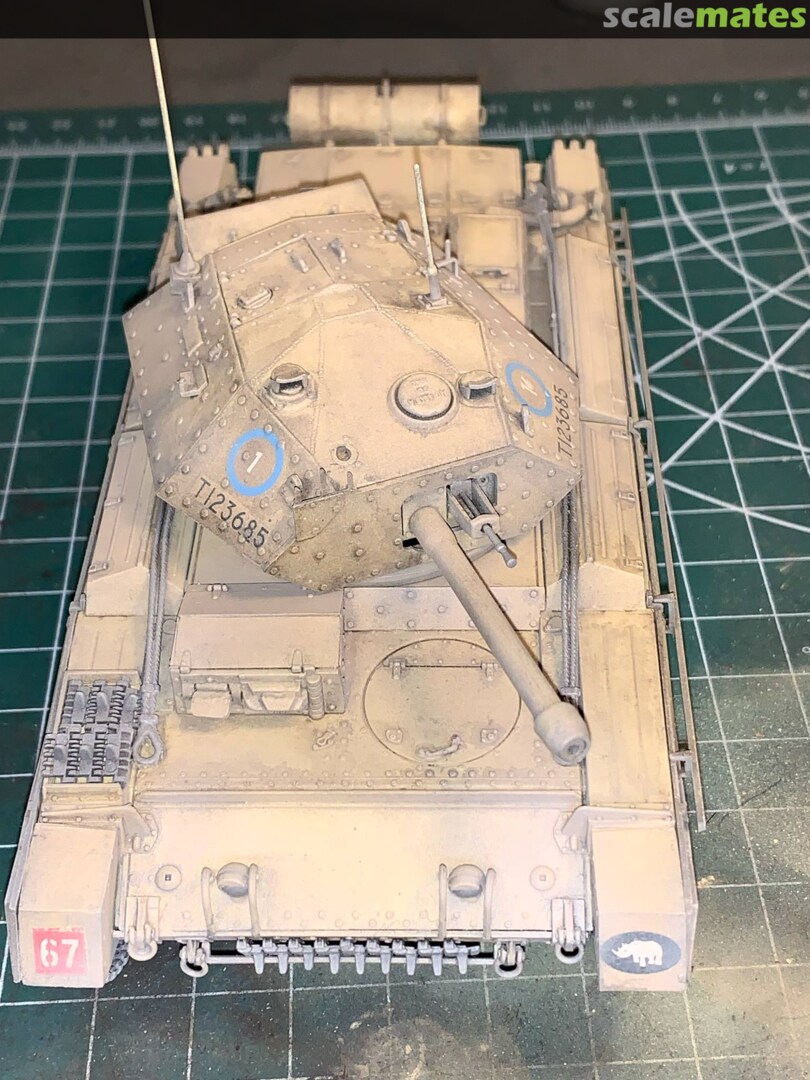
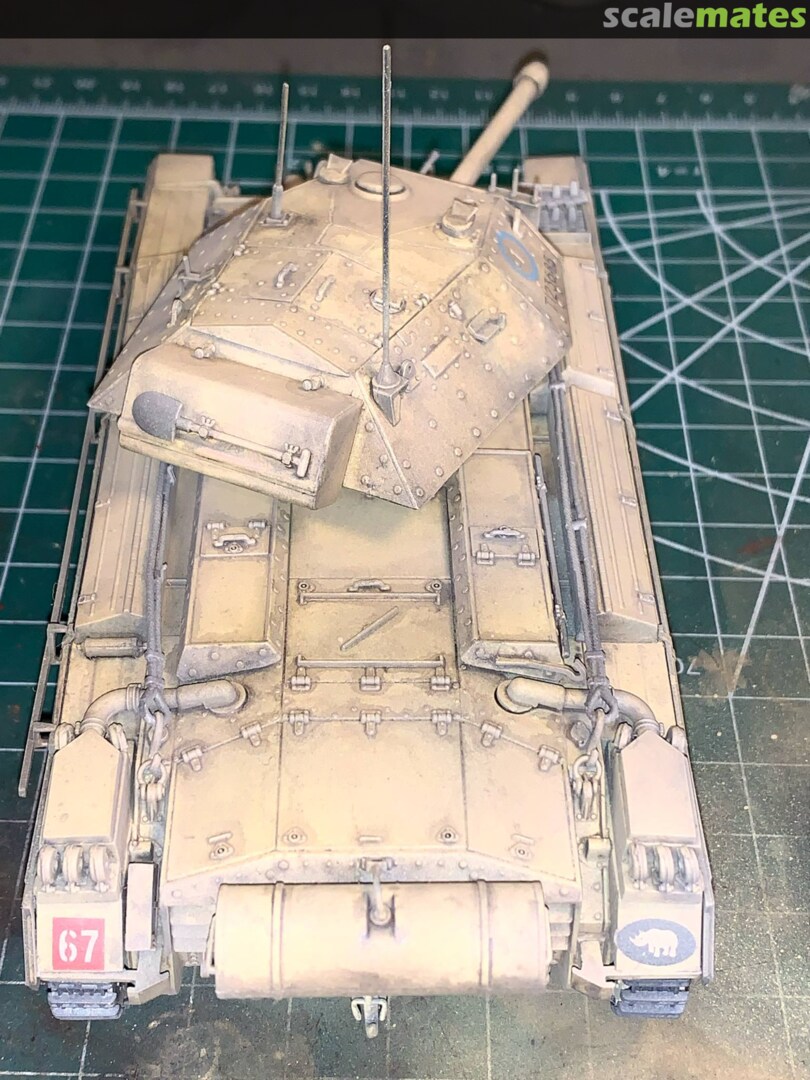
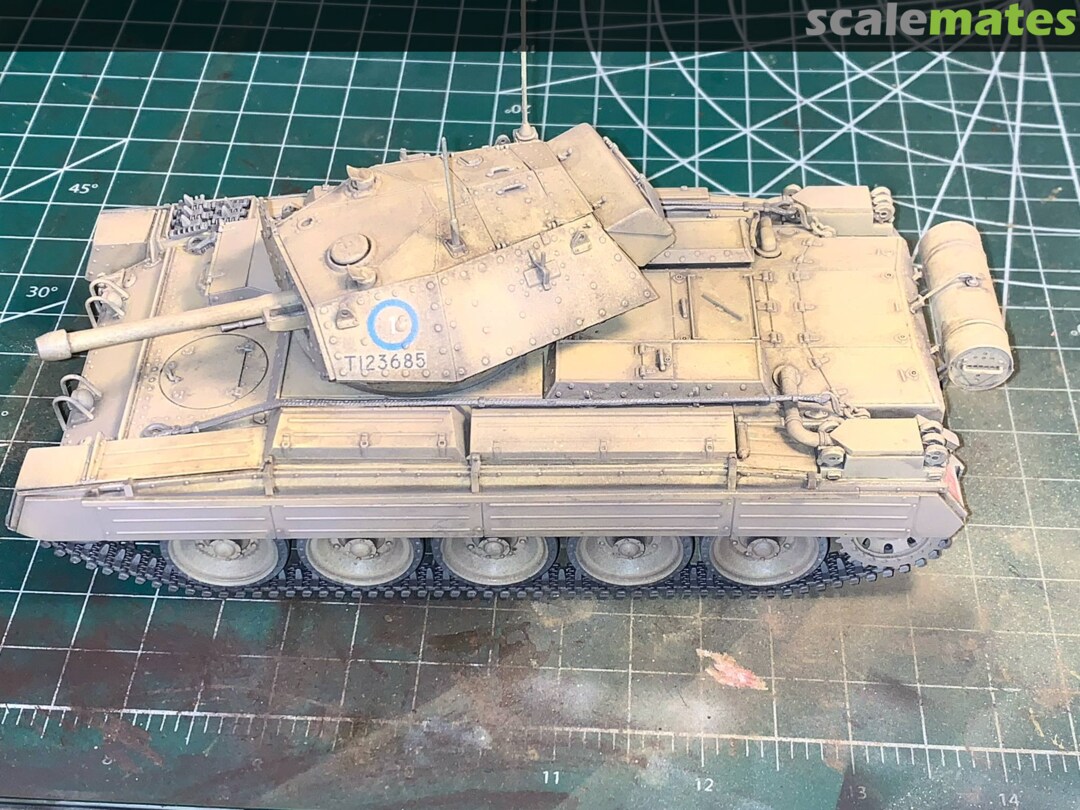
The early cruiser tanks saw their greatest success against the Italians in North Africa. Operation Compass in December 1940 -February 1941 saw the British defeat a vastly larger Italian force in Egypt and Libya. In March 1941 a number of Cruiser tanks in Egypt were sent to Greece to aid against the German Invasion there. As in France, this proved to be disastrous. Cruiser tanks continued fight in Libya through 1941 will little success against Rommel's Afrika Korp until Operation Crusader end in victory in December and Rommel retreated t 5July 14, 2025A15 Cruiser Tank Mk III "Crusader", 9th Royal Lancers RTR, El Ala Mein, Egypt, October 1942. The Mk III Crusader was the final production model of the A15 and it served in North Africa from late 1942 to May 1943 at which time it was declared obsolete and removed from service. This version mounted the 57mm QF 6pdr gun and added much needed punch to the tankers replacing the 40mm QF 2pdr of the earlier marks.
The Crusader Mk III was the best British built Cruiser tank to see action in North Africa, but it arrived at the same time that US lend lease M3 Grant and M4 Sherman tanks also appeared. The Grant and Sherman tanks would overshadow the Crusader during the remainder of the North African Campaign. The 75mm dual purpose (firing HE and AP rounds) guns on the US medium tanks were superior to the QF 6pdr which had no HE round.
In addition to the lack of HE rounds the A15 had a number of flaws which also ended its service in 1943. The Engine and final drives were prone to overheating and mechanical failures were a concern. Armor was of 40mm maximum rivetted construction, too thin and problematic for a tank in 1943. The main attribute of the Crusader was its low sleek profile and its speed. By late 1942, the Centaur/ Cromwell cruiser tank was projected to replace the A15 in 1943. 6July 14, 2025A15 Cruiser Tank Mk III "Crusader", 9th Royal Lancers RTR, El Ala Mein, Egypt, October 1942. The Mk III Crusader was the final production model of the A15 and it served in North Africa from late 1942 to May 1943 at which time it was declared obsolete and removed from service. This version mounted the 57mm QF 6pdr gun and added much needed punch to the tankers replacing the 40mm QF 2pdr of the earlier marks.
The Crusader Mk III was the best British built Cruiser tank to see action in North Africa, but it arrived at the same time that US lend lease M3 Grant and M4 Sherman tanks also appeared. The Grant and Sherman tanks would overshadow the Crusader during the remainder of the North African Campaign. The 75mm dual purpose (firing HE and AP rounds) guns on the US medium tanks were superior to the QF 6pdr which had no HE round.
In addition to the lack of HE rounds the A15 had a number of flaws which also ended its service in 1943. The Engine and final drives were prone to overheating and mechanical failures were a concern. Armor was of 40mm maximum rivetted construction, too thin and problematic for a tank in 1943. The main attribute of the Crusader was its low sleek profile and its speed. By late 1942, the Centaur/ Cromwell cruiser tank was projected to replace the A15 in 1943. 7July 14, 2025A15 Cruiser Tank Mk III "Crusader", 9th Royal Lancers RTR, El Ala Mein, Egypt, October 1942. The Mk III Crusader was the final production model of the A15 and it served in North Africa from late 1942 to May 1943 at which time it was declared obsolete and removed from service. This version mounted the 57mm QF 6pdr gun and added much needed punch to the tankers replacing the 40mm QF 2pdr of the earlier marks.
The Crusader Mk III was the best British built Cruiser tank to see action in North Africa, but it arrived at the same time that US lend lease M3 Grant and M4 Sherman tanks also appeared. The Grant and Sherman tanks would overshadow the Crusader during the remainder of the North African Campaign. The 75mm dual purpose (firing HE and AP rounds) guns on the US medium tanks were superior to the QF 6pdr which had no HE round.
In addition to the lack of HE rounds the A15 had a number of flaws which also ended its service in 1943. The Engine and final drives were prone to overheating and mechanical failures were a concern. Armor was of 40mm maximum rivetted construction, too thin and problematic for a tank in 1943. The main attribute of the Crusader was its low sleek profile and its speed. By late 1942, the Centaur/ Cromwell cruiser tank was projected to replace the A15 in 1943.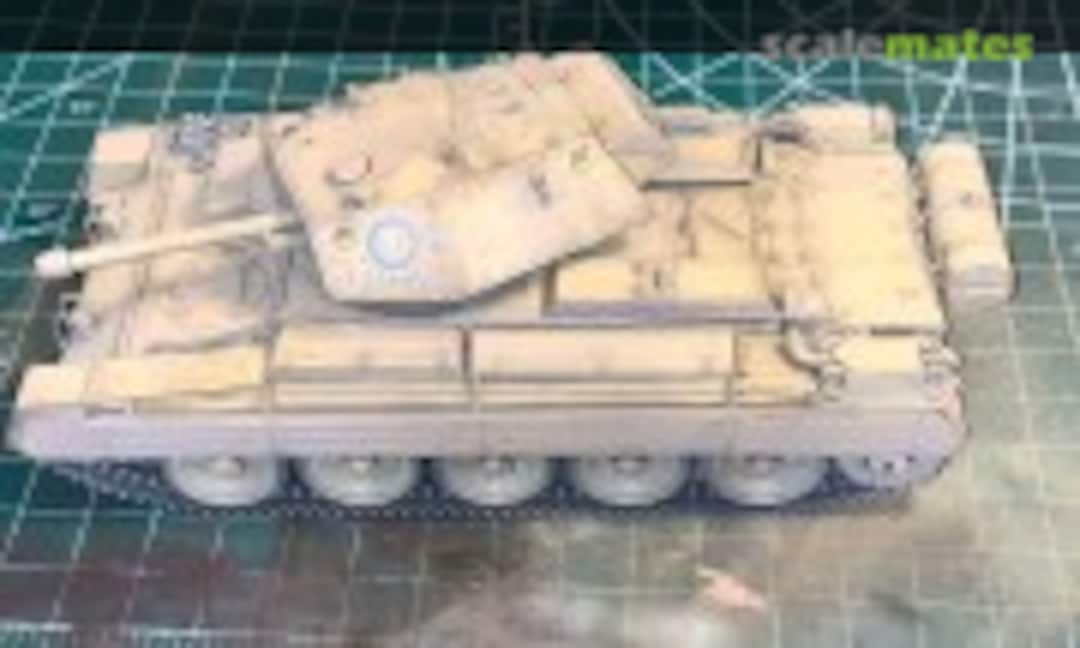 8July 14, 2025A15 Cruiser Tank Mk III "Crusader", 9th Royal Lancers RTR, El Ala Mein, Egypt, October 1942. The Mk III Crusader was the final production model of the A15 and it served in North Africa from late 1942 to May 1943 at which time it was declared obsolete and removed from service. This version mounted the 57mm QF 6pdr gun and added much needed punch to the tankers replacing the 40mm QF 2pdr of the earlier marks.
The Crusader Mk III was the best British built Cruiser tank to see action in North Africa, but it arrived at the same time that US lend lease M3 Grant and M4 Sherman tanks also appeared. The Grant and Sherman tanks would overshadow the Crusader during the remainder of the North African Campaign. The 75mm dual purpose (firing HE and AP rounds) guns on the US medium tanks were superior to the QF 6pdr which had no HE round.
In addition to the lack of HE rounds the A15 had a number of flaws which also ended its service in 1943. The Engine and final drives were prone to overheating and mechanical failures were a concern. Armor was of 40mm maximum rivetted construction, too thin and problematic for a tank in 1943. The main attribute of the Crusader was its low sleek profile and its speed. By late 1942, the Centaur/ Cromwell cruiser tank was projected to replace the A15 in 1943.

Comments
15 14 July, 23:09

Album info
Vehicles of the 2nd Armored Brigade in WWII


